Category Archives: Library

Virtual Fall Festival 2020

The Libraries are hosting the first Virtual Fall Festival beginning this Friday, August 28 through Friday, September 4. Join us for a week of fun, games and resources!

Friday 8/28 @11 am – Staying Well with HSCL
At this mini-workshop, learn about some of the best websites for health information, such as MedlinePlus, as well as information portals made by the HSC Library and others at UF that can help you find wellness resources in Gainesville. 

Monday 8/31 – All Day Guess the Children’s Book Title

Can you guess the titles of children’s books based on nothing but emoji?  Take the quiz and find out!

Tuesday 9/1 – All Day Get Buzzed with AFA

Take the multiple-choice quiz based on materials available at Architecture and Fine Arts Library to discover aspects of your personality you may not have known. Compare yourself with famous people, buildings, artworks, musicians and performers to discover the hidden you.

Wednesday 9/2 – All Day An InvestiGATOR in Library West

A fun, online, mystery activity to help you become familiar with the Libraries’ homepage and student-oriented services.

Thursday-9/3 – All Day Legends of the Hidden Library

Join the fearless Fall Fest explorers as they take a deep dive into the books, archives and manuscripts of UF’s Special and Area Studies Collections.

And

UF Resources from the Comfort of your Couch

Learn how to connect to, search, and shape the digital collections available at the Libraries from the source.

Friday 9/4 @ 3 pm – Drag Story Time with Bubbles 

Celebrate a first week back to class with some drag magic live from Marston Science Library. Special guest Mx. Bubbles will read aloud a selection of fun science-themed storybooks.
European Studies Statement on Collection Development, Access, and Equity in the Time of COVID-19

In response to the SALALM Resolution.

European Studies Statement on Collection Development, Access, and Equity in the Time of COVID-19

August 17 2020

In light of the COVID-19 situation and budgetary reductions, libraries are implementing collecting policies focused primarily on digital formats. The following represents an endorsement and expansion of the Seminar on the Acquisition of Latin American Library Materials (SALALM) Collection Development and Equity in the Time of Covid-19 Task Force Resolution issued 10 June 2020 — an endorsement and expansion of that resolution by library specialists engaged in the work of collection development and access to support the study of the communities, cultures, and languages of Europe. Members of the three Europe-focused programs administered by the Center for Research Libraries — the Slavic and East European Materials Project (SEEMP), the Collaborative Initiative for French Language Collections (CIFNAL), the German-North American Resources Partnerships (GNARP) — share the concerns around equity, representation, and access raised by our SALALM colleagues, and hereby reaffirm those concerns as they pertain to the long-term availability to North American researchers and teachers of the documentary record of the peoples, languages, and cultures of Europe — an extensive and enormously diverse geographic category having eastern and western divisions; numerous national and subnational cultures and languages representing many ethnic categories and language families; porous shared boundaries with Africa and Asia; and an abiding cultural and linguistic consanguinity with Latin America.

We list here seven concerns surrounding current challenges and vulnerabilities in the collection development ecosystem for European Studies and scholarship originating from Europe, and three related resolutions.

1. Whereas, the majority of publications from Europe are available in print only, and cannot be licensed to North American libraries in electronic formats, and many of the ebooks that are available come with unacceptable DRM restrictions, unsustainable price models, and moving walls, hindering access to timely and useful content;

2. Whereas, collection development policies privileging ebooks generally exclude non- English language materials and a significant portion of the cultural and scholarly production from the region, including small independent presses and the voices of marginalized, minority and vulnerable communities, new social movements, and transnational authors, which are so critical to advancing research of and learning about the linguistic and cultural diversity of the European continent;

3. Whereas, the inability to lend and borrow European ebooks inter-institutionally further reduces access to critical resources available across North American libraries and directly undermines the numerous existing shared print and other cooperative collecting partnerships formed to guarantee adequate representation of the linguistic, ethnic, and cultural diversity of the European continent;

4. Whereas the output of small, independent, print-only publishers outside mainstream distribution networks in countries with legacies and/or current practice of authoritarian publishing and media control (including many in Eastern Europe and the territories of the former Soviet Union) represents a crucial category for North American collections supporting research and teaching focused on those regions, and an e-centric collection model jeopardizes adequate capture and preservation of these critical categories;

5. Whereas, a sudden shift away from collecting research materials available only in print not only threatens the integrity of diverse library collections, but also places a dedicated network of local vendors of scholarly and ephemeral research materials at risk;

6. Whereas, these vendors are important because of their expertise in specific regions and local publishing practices, and the access they provide to necessary and unique materials for learning, teaching and research that would be overlooked by larger vendors based outside of the region;

7. Whereas, while pioneering cooperative Open Access models such as the European Commission’s OpenAIRE, OpenEdition in France, REDIB in Spain, OA2020 organized by the Max Planck Digital Library in Germany, and other initiatives have made scholarly journals from the region widely available, a gap for open monographs still exists across Europe;

Be it resolved, that the Collaborative Initiative for French Language, and the German-North American Resources Partnerships, and the Slavic and East European Materials Project, on behalf of their members:

A. Urge North American libraries to continue acquiring European print material through a network of regional vendors, often the only available sources, and thereby not limit diversity in scholarly collections.

B. Encourage collaboration and further discussion with other organizations working with international collections at a national and international level, such as the Africana Librarians Council, other divisions of the Center for Research Libraries, Council on East
Asian Libraries, Middle East Librarians Association, the East Coast Consortium of Slavic Library Collections, the Pacific Coast Slavic and East European Library Consortium, the MidWest Slavic and Eurasian Library Consortium, the Association for Slavic East European and Eurasian Studies Committee on Libraries and Information Resources, and the Seminar for the Acquisition for Latin American Library Materials (SALALM), among others.

C. Advocates for continued and increased support for Open Access initiatives in European countries through the Center for Research Libraries’ Collaborative Initiative for French Language Collections, German-North American Resources Partnership, Slavic and East European Materials Project, and other existing collaborative projects.
page3image1667296

My Updated Research Guides at UF

Hi everyone, in preparation for the Fall 2020 semester, I have updated the following research guides:

European Studies

French and Francophone Studies

German Studies

International Students

Italian Studies

Portuguese Studies

Slavic Studies

Spanish Studies

Study Abroad (done in collaboration with Lisa Campbell)

Voting (a voting guide for the UF community done in collaboration with Lisa Campbell)

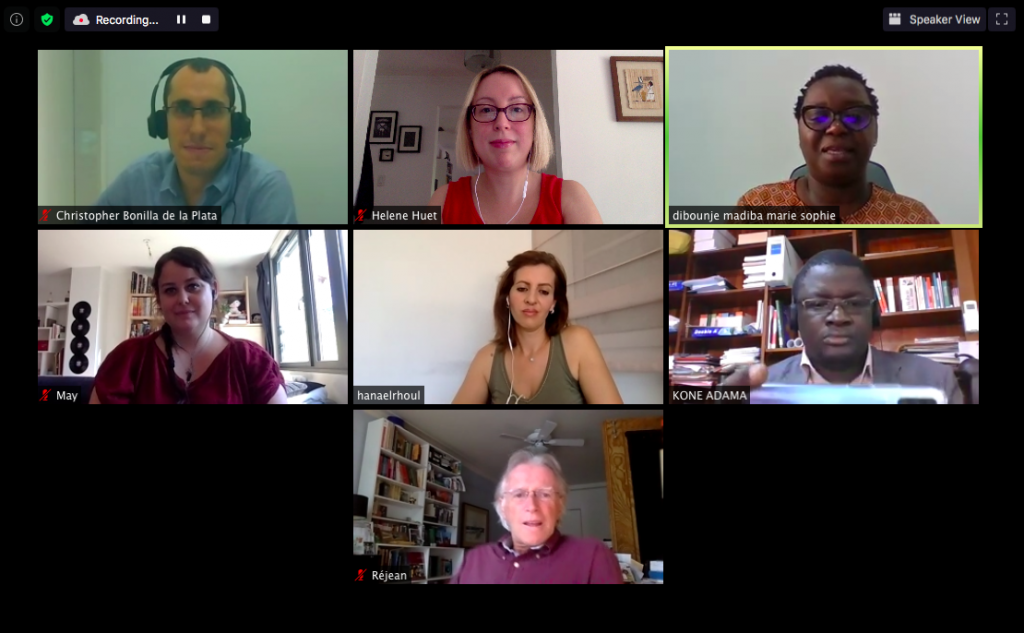
French Academic Libraries During COVID-19: A Conversation with Mélissa Defond

French Academic Libraries During COVID-19: A Conversation with Mélissa Defond.

For this special zoom session, Mélissa Defond, Head of the Research Department at the Université Polytechnique, Hauts-de-France, discussed the impact of COVID-19 on academic libraries in France. More specifically, she discussed the situation at her library and what steps they are taking now that confinement is ending in France. This session was an opportunity to share thoughts, concerns, and ideas as we start thinking about steps to reopen libraries and what the future of academic libraries worldwide will look like.


Newsletter Spring 2020 Semester

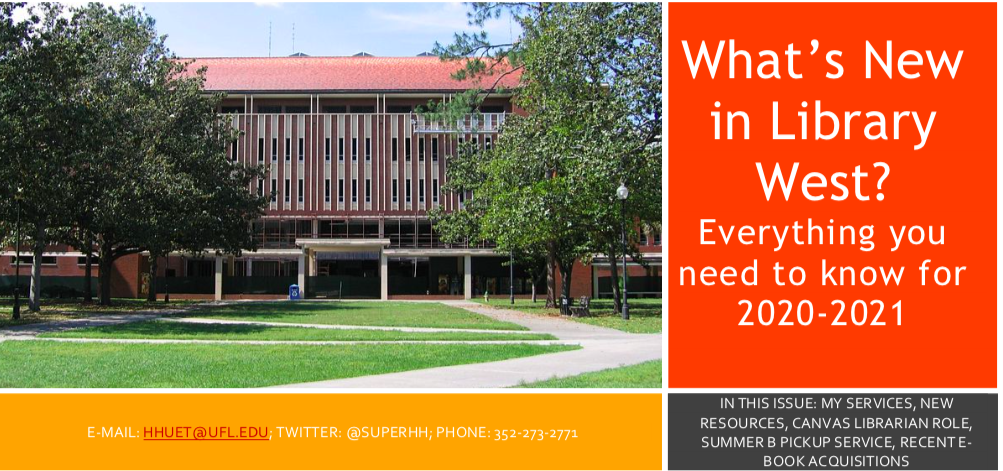
This is my latest newsletter for Spring 2020 about the services I provide for my patrons, new resources we have recently acquired in the UF libraries, information about the Canvas Librarian Role, information about upcoming library events for the month of January, and 10 of our most recent book acquisitions.

To see the newsletter, click on the image below.

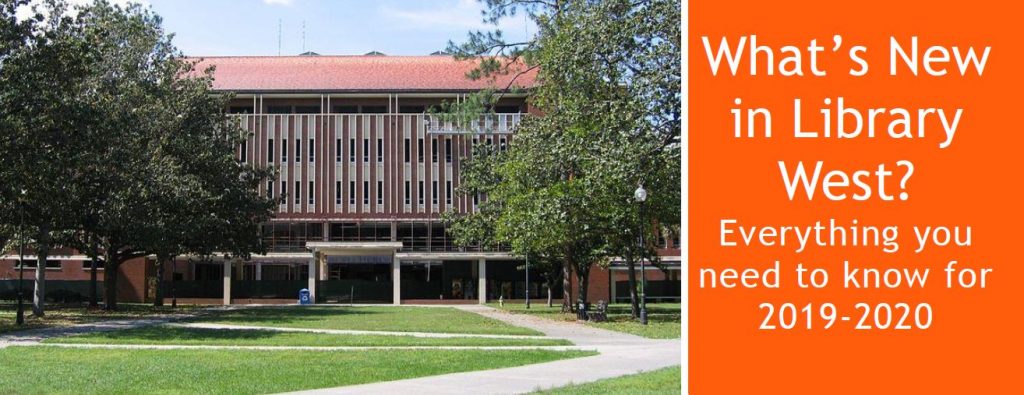
Image of the title of the newsletter I have created for Fall 2019
Spring 2020 Newsletter

2nd Annual Conference of the Florida Digital Humanities Consortium (FLDH)

The Florida Digital Humanities Consortium (FLDH) will host its 2nd annual conference at Flagler College in St. Augustine, FL on Friday, March 27, 2020. FLDH is a collective of institutions in the State of Florida that seeks to promote an understanding of the humanities in light of digital technologies and research. Founded in 2014, FLDH provides a platform for studying and discussing digital tools, methods, and pedagogies as well as educates teachers, faculty, and the public about the multiple, interdisciplinary ways humanities research and computing impact our world. Each year at the annual conference, FLDH members and guests meet to hear current research, discuss issues of interest, and set goals for future collaboration and digital humanities research.

The conference will last all day and include academic research and teaching presentations in the morning and early afternoon, followed by a THATCamp session and a plenary talk and dinner. FLDH seeks proposals for papers, posters, lightning rounds, roundtables, and panel presentations on any topic related to digital humanities. We welcome proposals not only from those in higher education, including students, faculty and staff, but also from cultural institutions and other organizations doing work in the digital humanities.

Individual abstracts of 200-250 words should be submitted for talks of 15 minutes.

A panel proposal of 150-250 words by the panel organizer(s) and individual abstracts for 3-5 papers can be submitted for panel presentations.

Posters, lightning rounds, and roundtables can be proposed with brief descriptions of 150 words. 

All proposals should include name, affiliation, contact email, and needed IT equipment.

The deadline for submissions is January 15, 2020.  


You can submit your proposals at https://ufl.libwizard.com/f/FLDH2020